Alabama Cottage Food Law
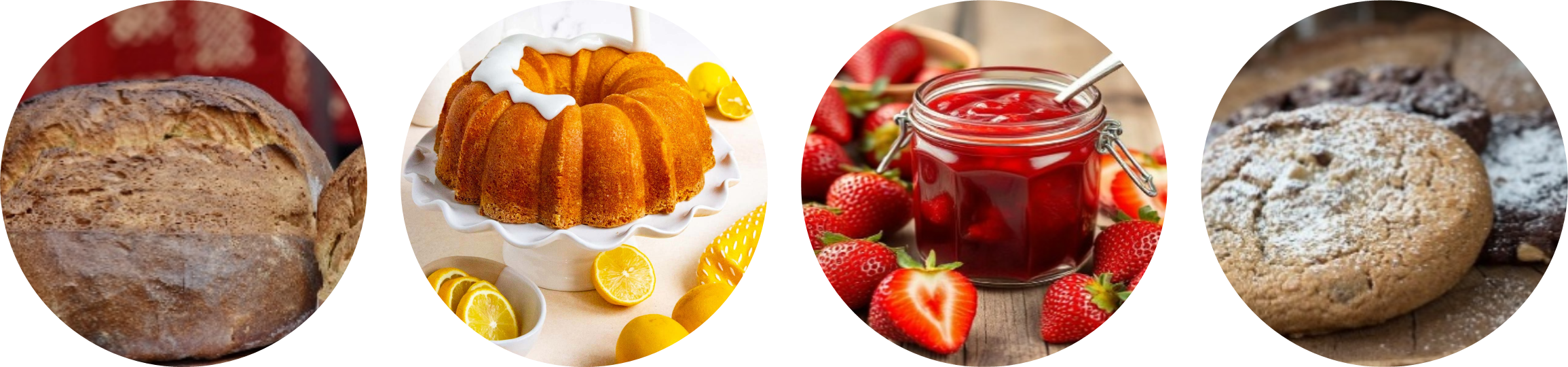
The Alabama Cottage Food Law, effective since 2014 and revised in 2021, allows individuals to produce certain nonhazardous foods at home. Cottage foods are nonpotentially hazardous items made in a home kitchen that do not require time or temperature control for safety.
Cottage Food Requirements:
- Food must be prepared in the primary residence.
- Food must be sold directly to consumers (via phone, online, or in-person). Wholesale to food establishments (restaurants, stores, etc.) is prohibited.
-
Food must be low risk, which includes:
- Baked goods: cakes, cookies, pastries, breads, and pies
- Jellies, jams, and fruit preserves
- Candy
- Dried/Dehydrated herbs, herb mixes, fruits, or vegetables
- Roasted coffee
- Dried baking mixes
- Fermented or preserved vegetables or fruits that do not result in the production of alcohol, and have an acidity level allowed by the department
-
Food produced must be labeled with (at least 10-point font):
- Common name of product
- Name and address of producer
- List of ingredients (including sub-ingredients) in descending order of prominence.
- Statement that products are not inspected by the Health Department.
- Disclaimer that the product may contain allergens.
- The cottage food entity must complete and submit an application to its local health department to obtain approval and registration.
- The cottage food entity must obtain and maintain certification from an approved food safety training provider (JCDH Food Handler’s Certification, ACES Cottage Food Certification, or any ANSI-accredited program).
Please use the link below for the application and guidance documents.
Alabama Cottage Food Law (jcdh.org)
For more information:
Visit the Food and Lodging Desk at the Jefferson County Department of Health, 1400 6th Ave South, Birmingham, AL 35233. You can also contact us at (205) 930-1260 or food.lodging@jcdh.org.